
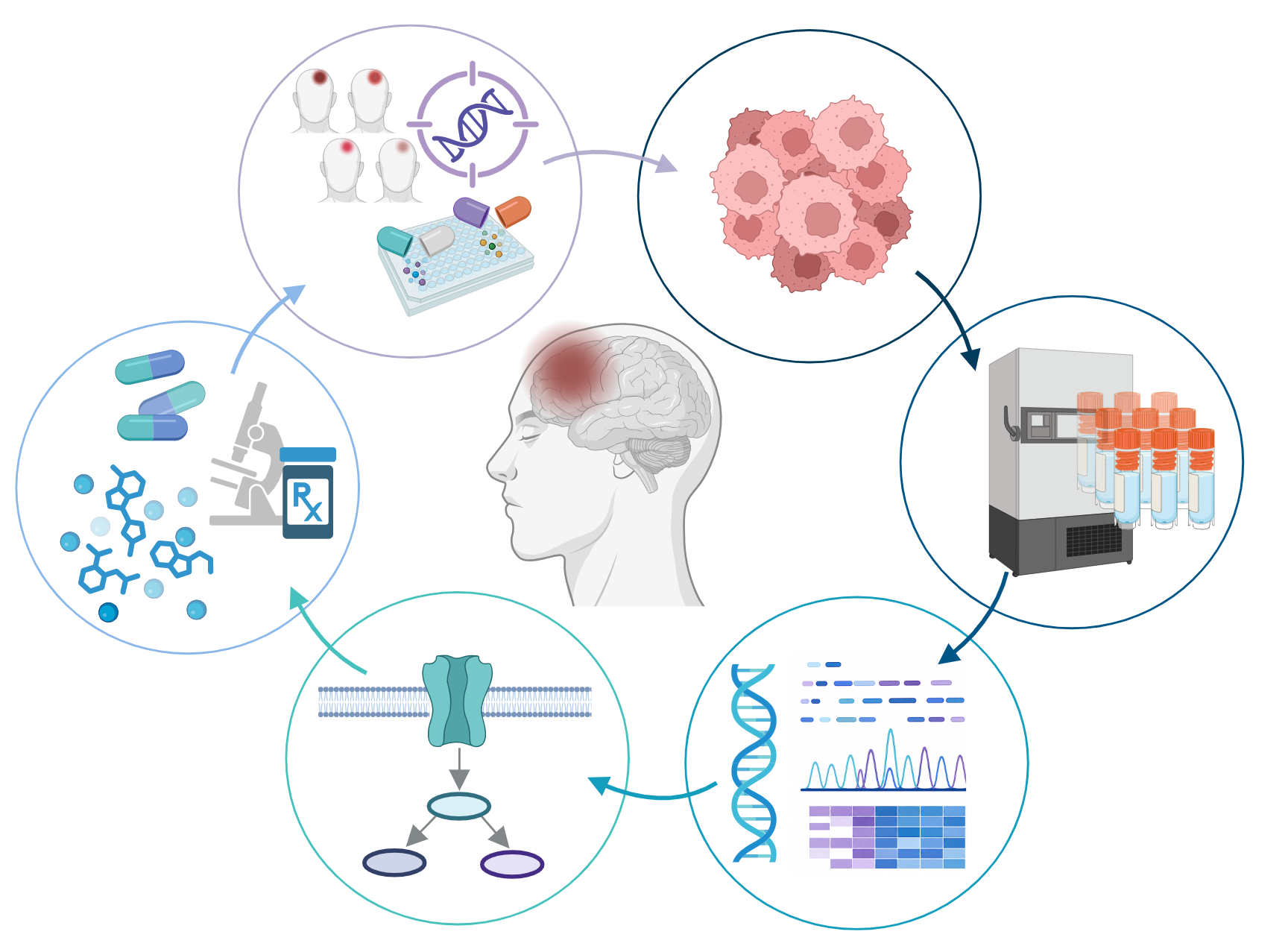
The Kurland Family Neuro Research Lab is the Nathanson Lab’s dedicated brain tumor drug discovery and development program. Focused on glioblastoma and other malignant brain tumors, the lab discovers and advances novel therapeutic candidates through integrated pharmacology, chemical biology, translational modeling, and molecular profiling. By pairing drug discovery with deep interrogation of tumor response and resistance, the lab seeks to identify the biomarkers, mechanisms, and disease contexts that can guide more precise therapeutic development for patients with neuro-oncologic disease.
Drug Discovery and Development of Brain-Penetrant Therapies

The effective treatment of brain tumors requires that drugs get into the brain to target the tumor. However, the vast majority of FDA approved drugs do not cross the blood brain barrier (BBB) – a physical barrier that is highly selective for what can cross into the brain. Through collaborations with Dr. Michael Jung (Distinguished Professor of Chemistry, Co-Inventor of two FDA approved drugs for cancer), we have established a drug development program that is focused on synthesizing and testing new, potent and brain-penetrant drugs that specifically target malignant glioma cells.
Developing Innovative Pre-clinical Models of Brain Tumors

The translation of therapeutic strategies for treating several malignancies have been hampered by the lack of robust pre-clinical models that accurately reflect the human disease. This is particularly relevant in malignant gliomas, where the genetic and functional properties of conventional cell lines show dramatic divergence from the original patient samples. This has major implications for understanding the biology of these tumors and the development of new therapies. To address this, we have created a novel patient-derived, orthotopic glioma xenograft library (termed GliomaPDOX). This library captures the vast molecular diversity of GBM.
Molecular Diagnostics of Brain Tumors

Although all gliomas originate in the brain, the molecular alterations are often unique between each patient’s tumor. These distinctions can have profound implications for diagnosis and therapeutic response. Our laboratory uses next generation sequencing – including RNAseq and exome sequencing – of patient and GliomaPDOX tumors to precisely define the molecular abnormalities that are driving each glioma. To complement this, we also employ non-invasive molecular imaging, such as positron emission tomography (PET), to examine how imaging can predict tumor response to therapeutics targeting specific molecular alterations in glioma patients and models.